
We headed north out of Quito and hit the equator. There is a museum and a park there, but we turned west, dancing from hemisphere to hemisphere a few times while plummeting down countless switchbacks for what felt like the entirety of the two-hour ride. I was reminded of those marathon downhill skateboarding videos on YouTube. Our ears popped about five times before we finally reached the valley floor, some 5,000 feet lower than Quito.
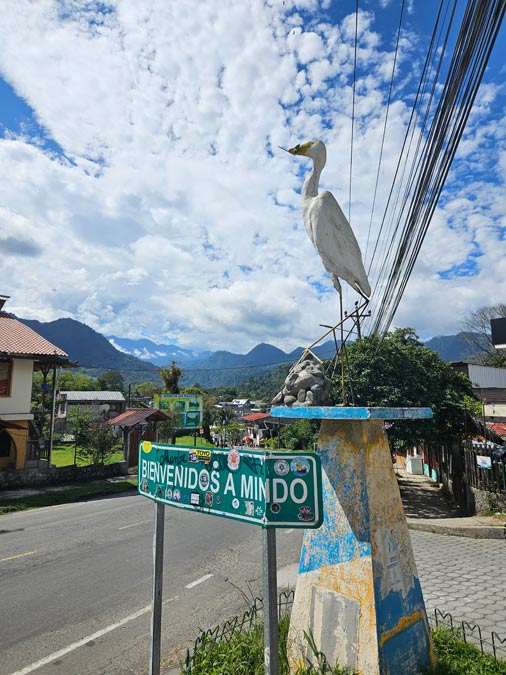
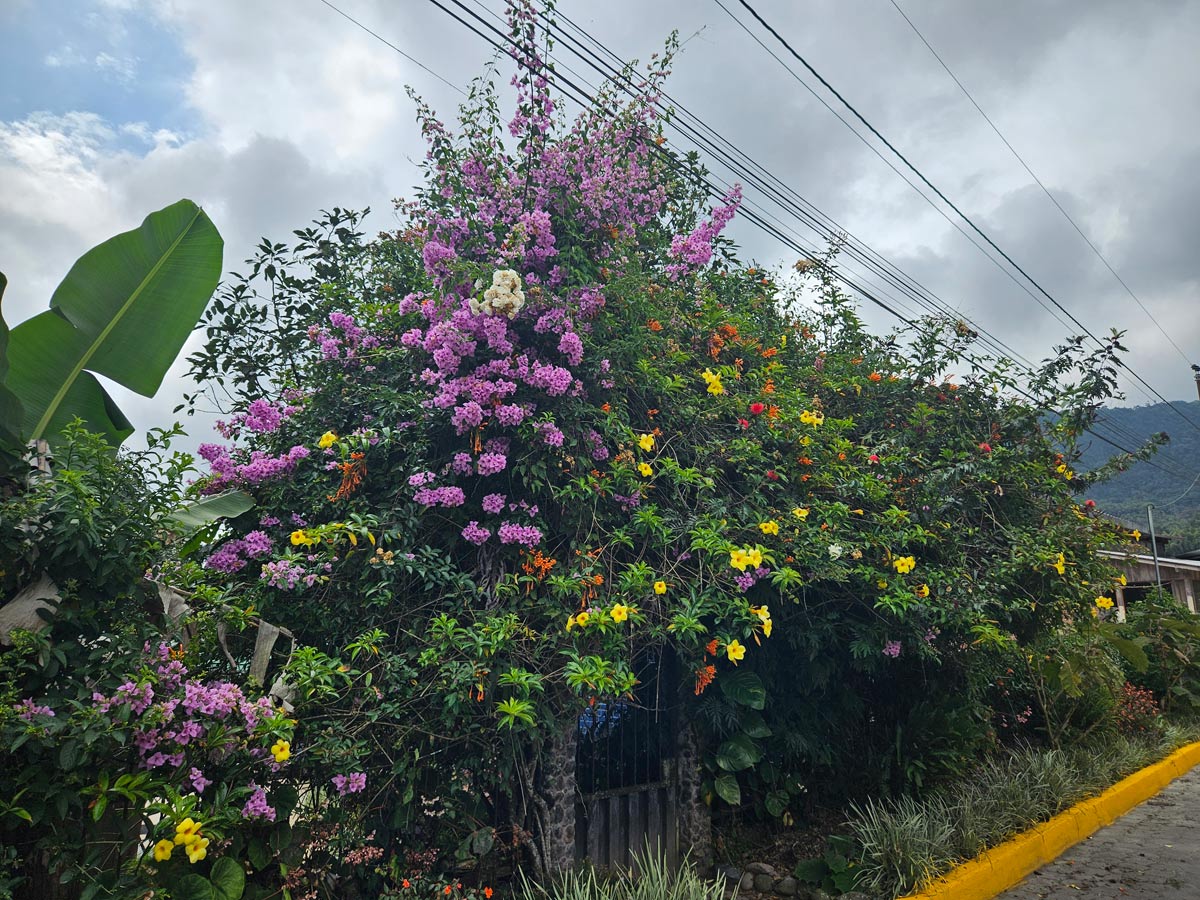
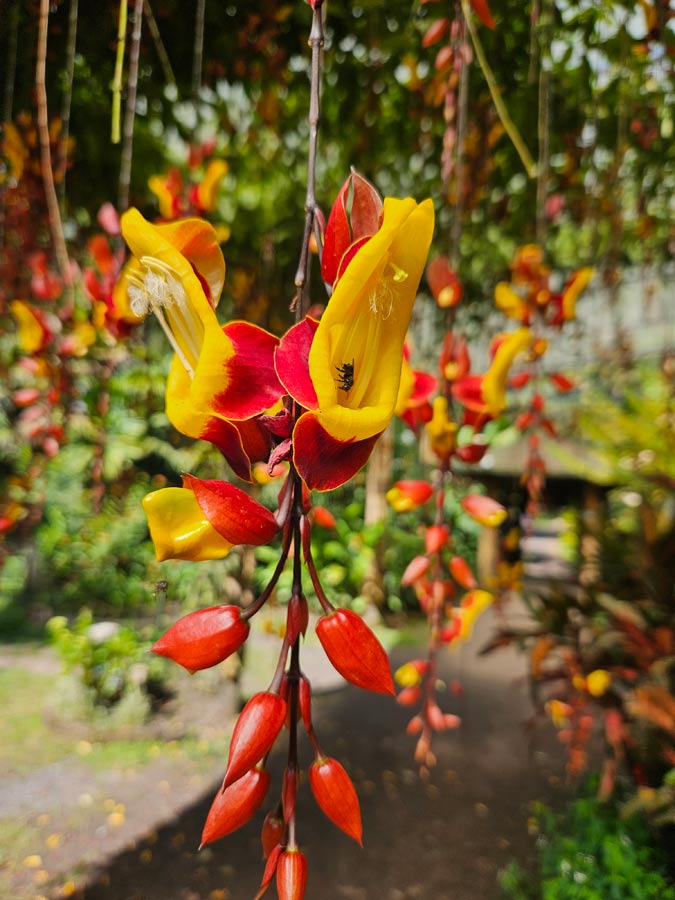
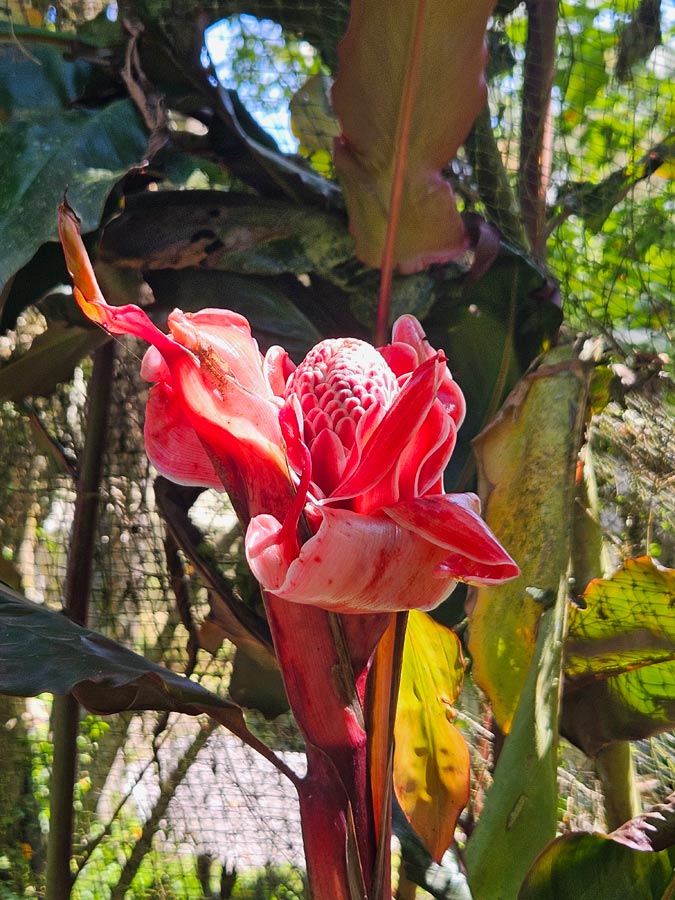
The town in the Mindo Valley (“San Carlos” on google maps, but everyone calls it “Mindo”) is small, about 10 blocks long and 6 wide for the business district – just enough of anything to keep one entertained for a few days. It being in a “cloud forest,” you’ll see a zillion flowers, sometimes all in the same place.
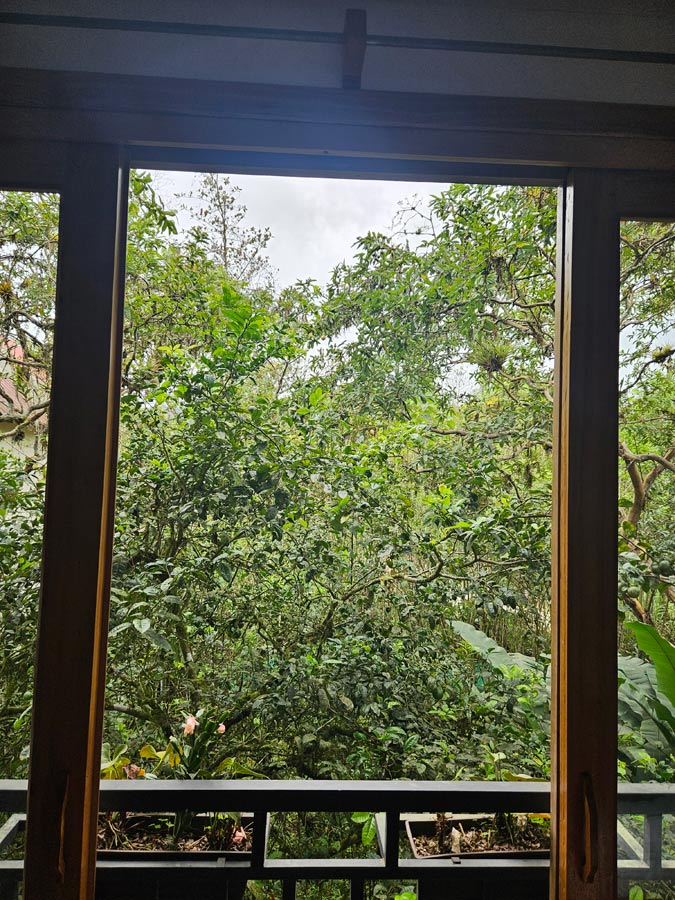
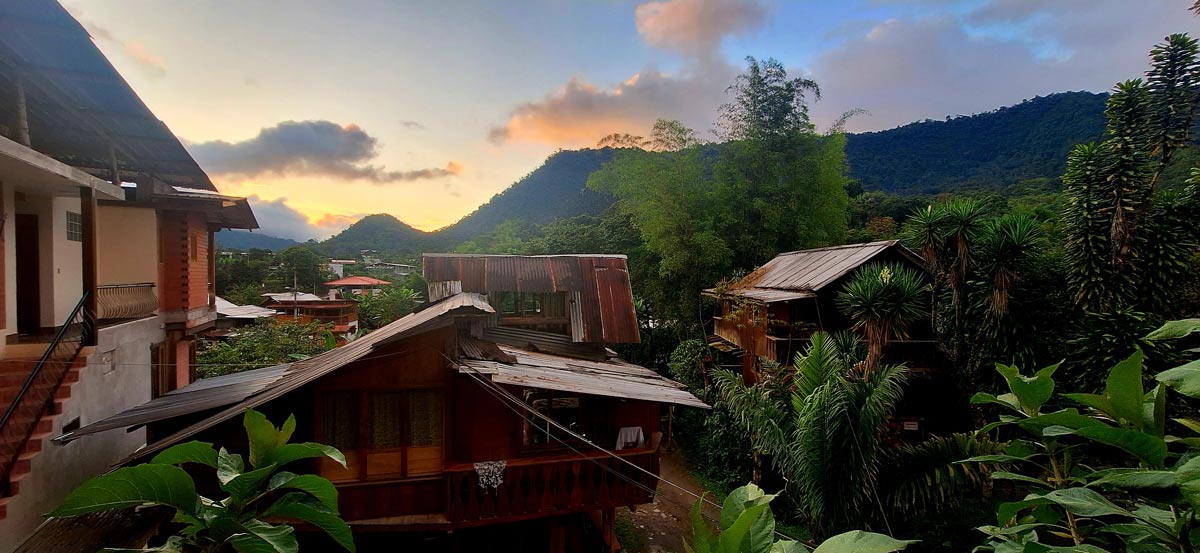
We checked into Margarit Boutique Hotel, a small, modern building with about five rooms (they were drawing out plans for an expansion while we were there.) Our window, as well as the lobby/dining area, overlooked a small patch of jungle between the building and a small river. Margarit puts out hummingbird feeders and bananas out to attract a variety of critters, but if that’s not enough for you she can arrange a bird-watching expedition or other tours.
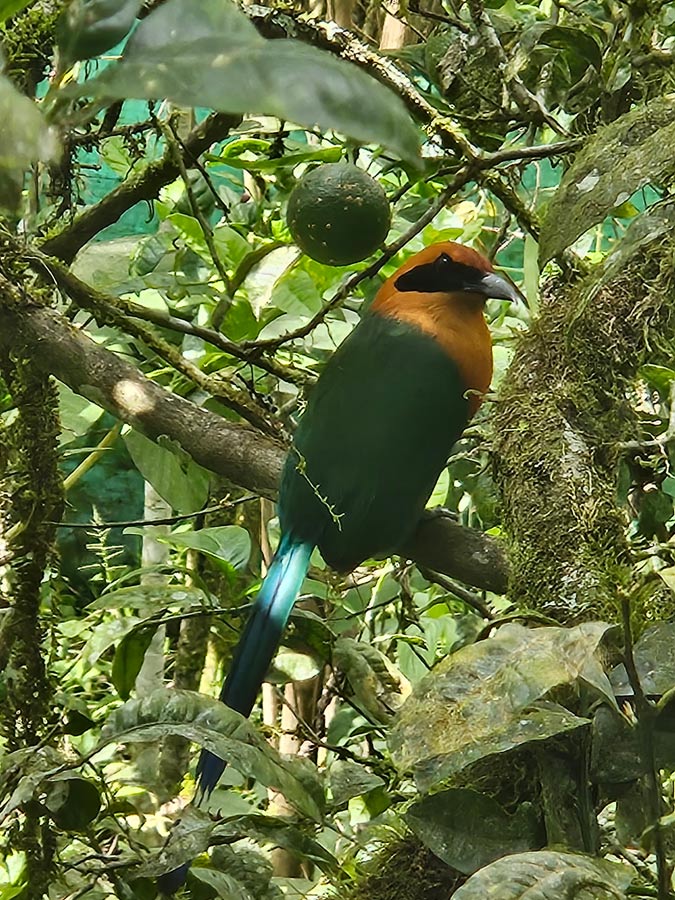
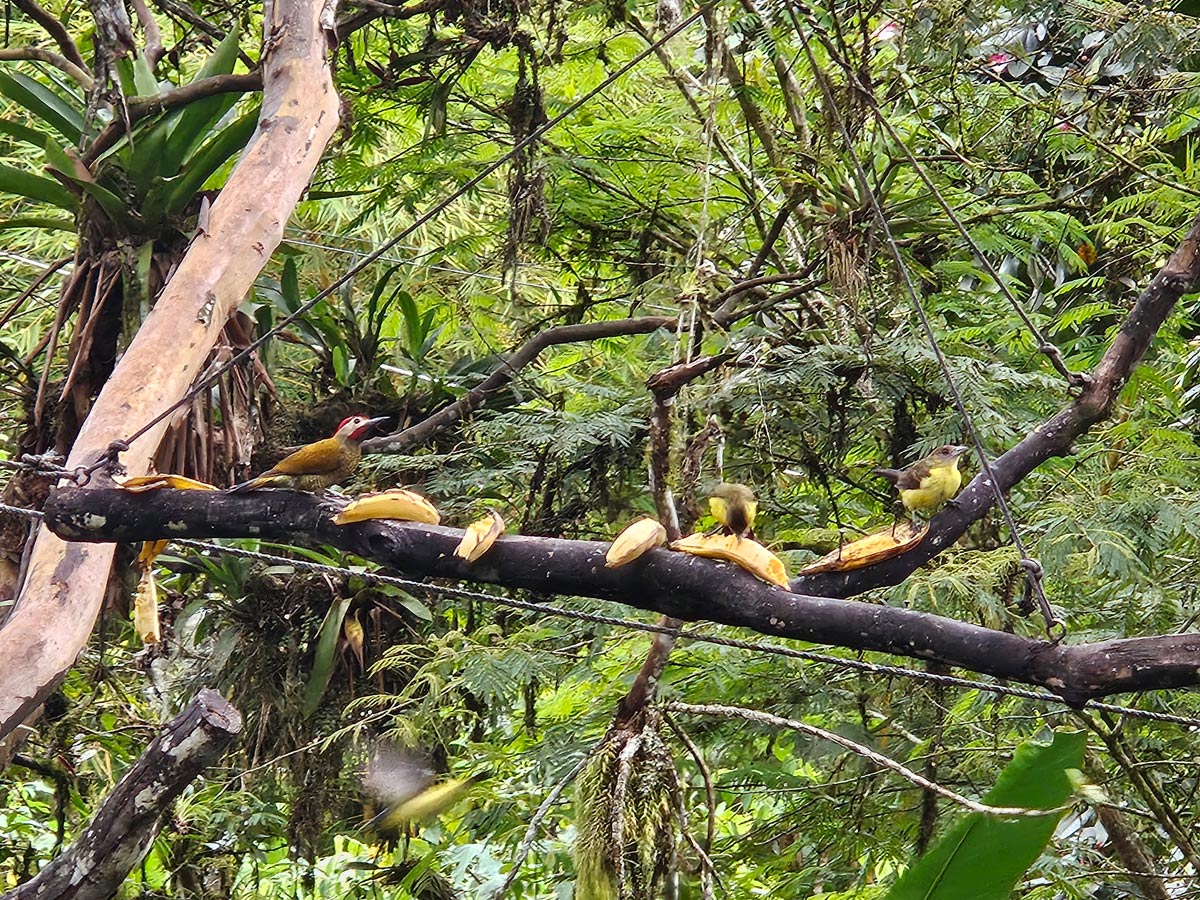
From her patio, we spotted so many hummingbirds that they almost lost their novelty. We spied a toucan once, but it got away before we could snap a photo. A pair of Rufous Motmots were regular lurkers, one of which is pictured below.
When we arrived on a Sunday afternoon, the town was bustling with tourists from Quito and elsewhere, zooming down the streets on rented ATVs. Local guides hauled truckloads of innertubes to and from the river for rafting tours. The corner restaurant had a woman handing out samples of grilled sausage. Pickup trucks blared recorded messages advertising the driver’s wares, one for propane, another for papayas.
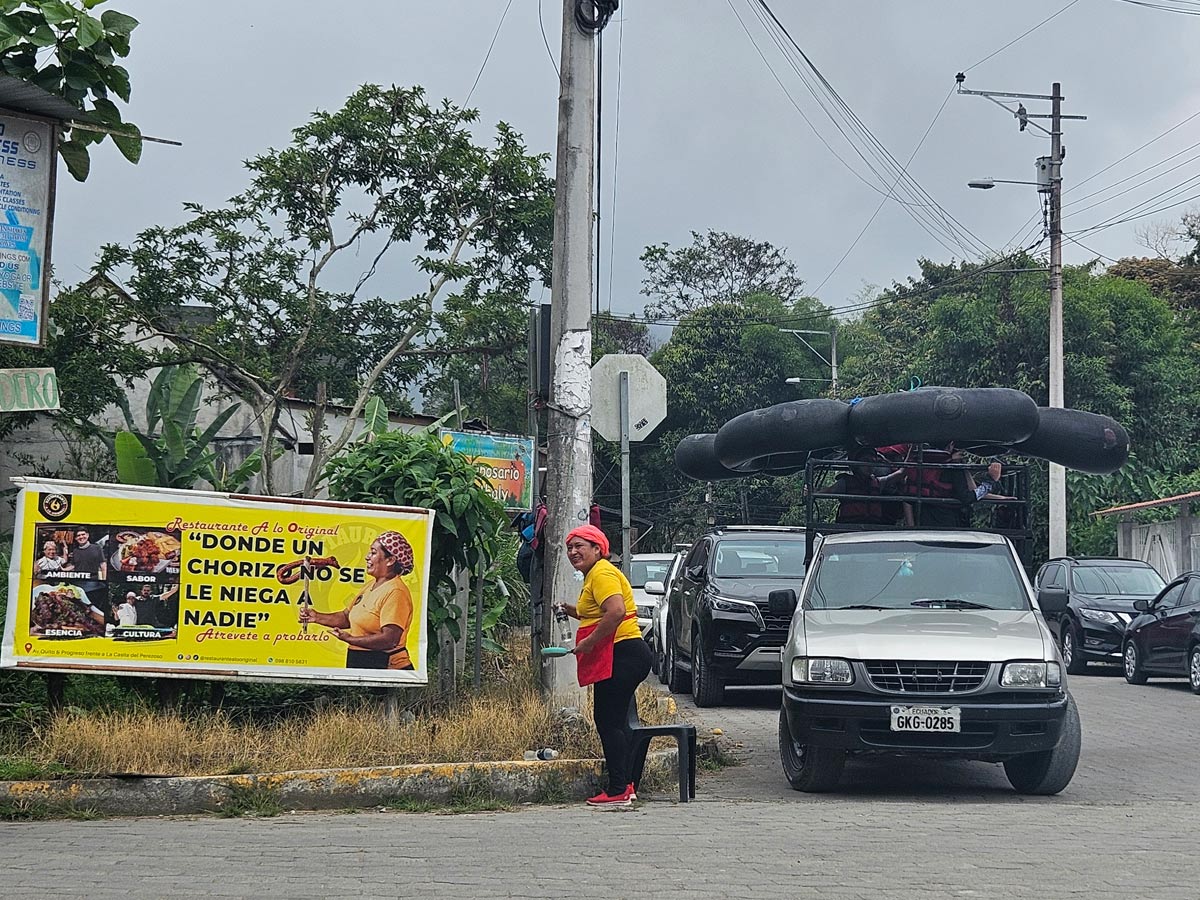
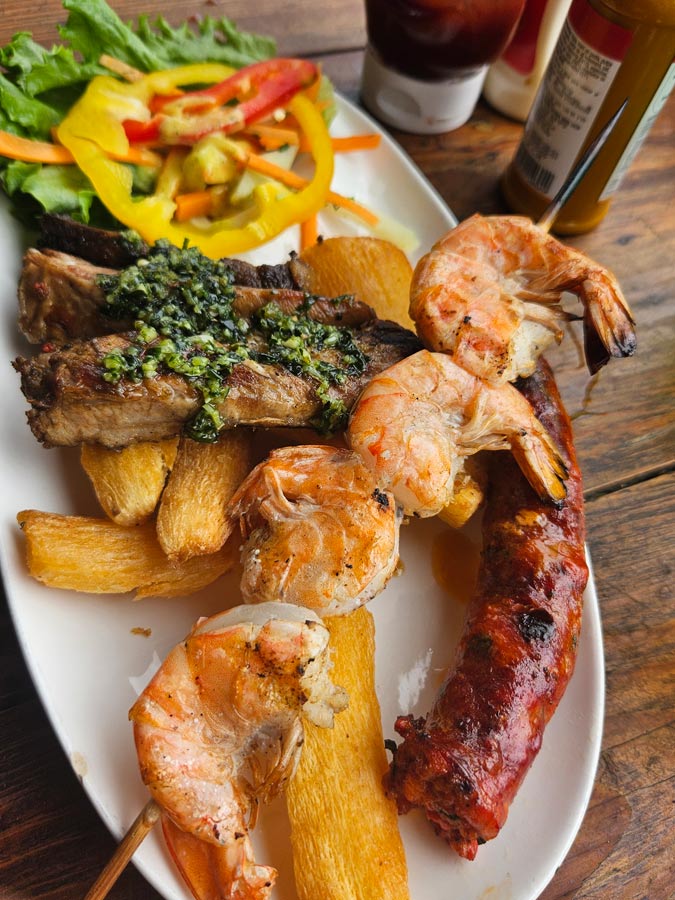
The sausage lady’s sample, and a corner table on the sidewalk, sold us on Restaurante a lo Original, where the chef was busily cooking a variety of meats on a grill outside the establishment. A few dogs followed us, one eventually dozing off under our table. The dogs go almost everywhere, wandering in and out of restaurants and occasionally getting snappy with each other over territory.
The main street is crammed with shops, restaurants, and tour offices. There are a few side streets with more of the same, but even on foot you can see the whole town in an afternoon. Walk a few blocks in any direction and you’re in the woods with birds chirping and probably a stream gurgling nearby.
Come Monday, the town gets quiet – perhaps too quiet. A lot of businesses close Monday-Tuesday to recuperate from the weekend’s deluge. We heard from a local that the town is struggling due to a decline in tourism. But it feels incredibly safe. There is only one road in/out of the place, so bad hombres would have a hard time getting away.
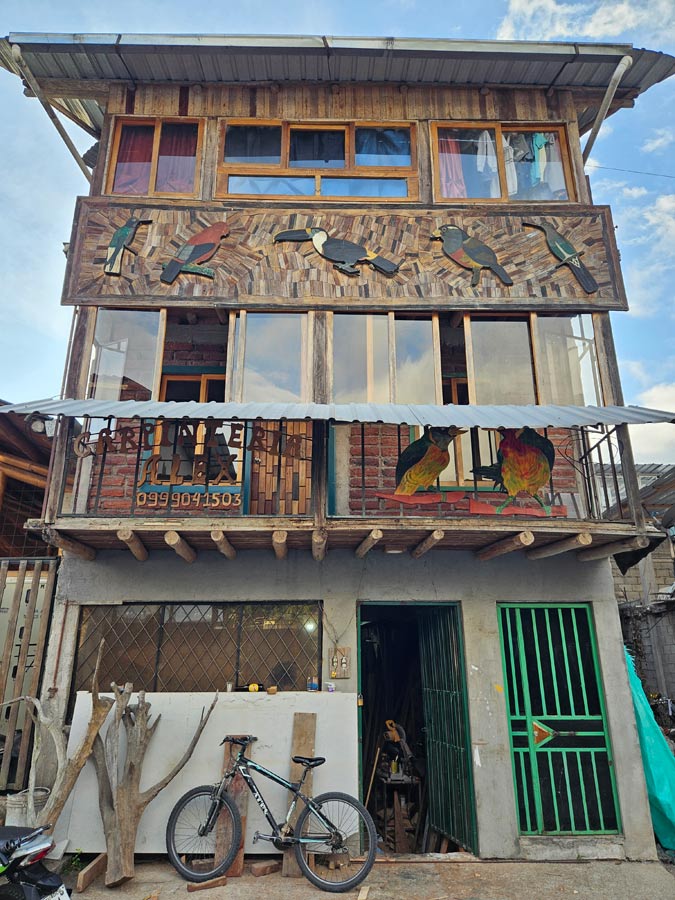
A lot of the buildings are drab concrete block, while others are fanciful, or trendy in a modern, minimalist way, while some maintain the Latin American tradition of… improvisation?
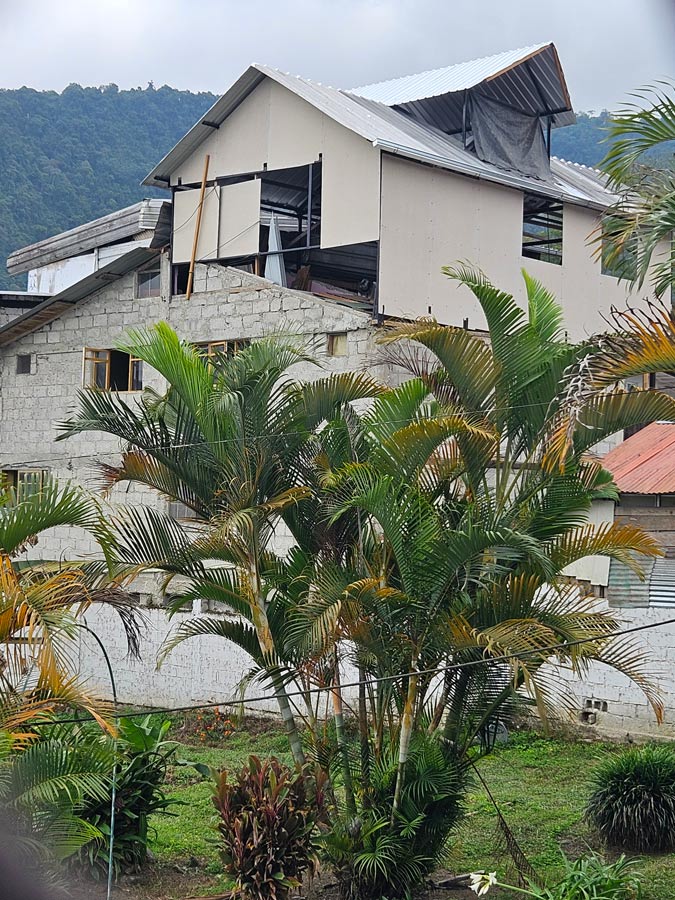
With the mild weather and, somehow, a low number of bugs, a lot of establishments in Mindo are little more than covered patios. A chicken wandered through the chicken restaurant where we had lunch a few days later.
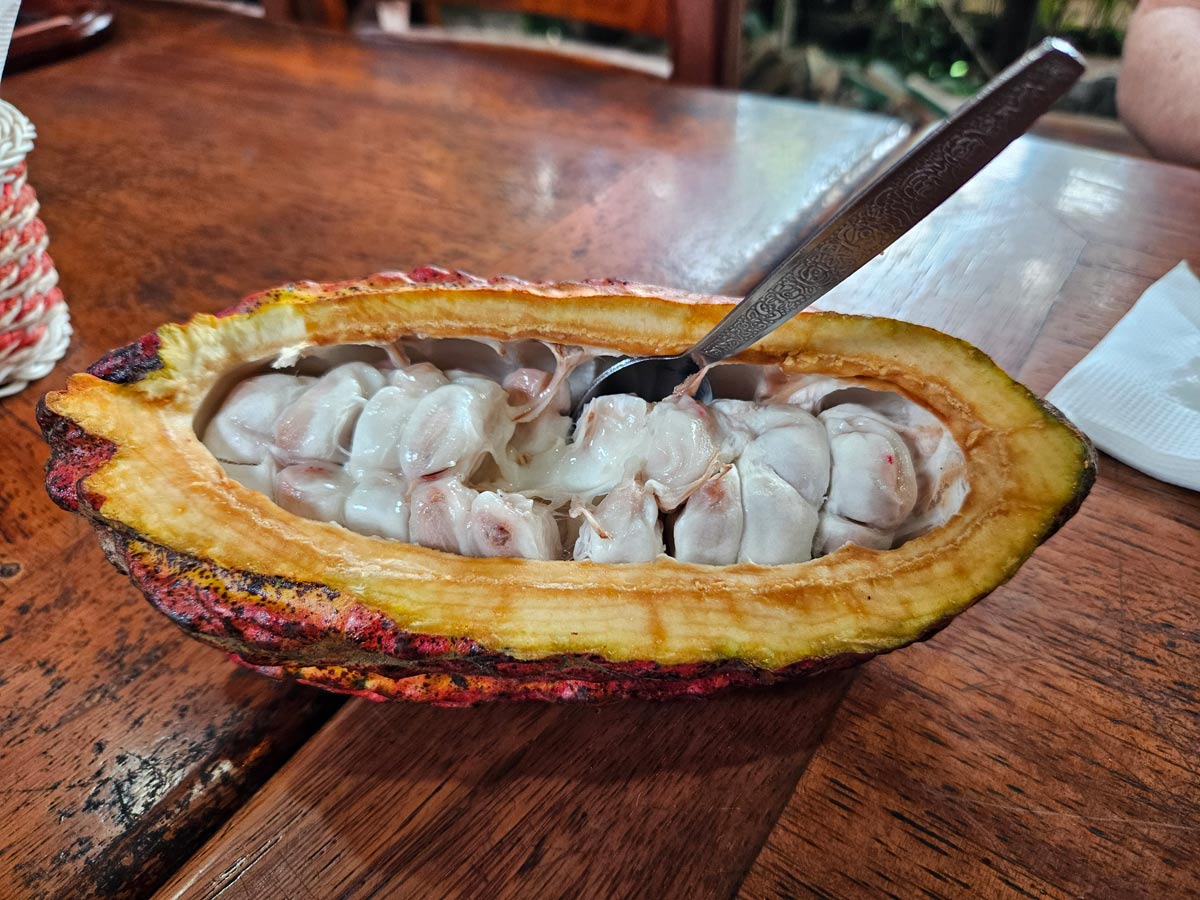
A popular business model is chocolate shops offering tastings and demos of how chocolate is made. We opted for Yumbo’s, a block off the main street. For $5 each, we got a 30-minute lecture and sampled 11 flavors of Yumbos’ award-winning offerings. (For $20, you also got a chocolate facial and a tour of the facility.) They also served perhaps the best brownie I’ve had in my life and a damn fine hot chocolate. We also got to eat directly from a fresh coco pod, sucking the tart pulp off an individual bean.
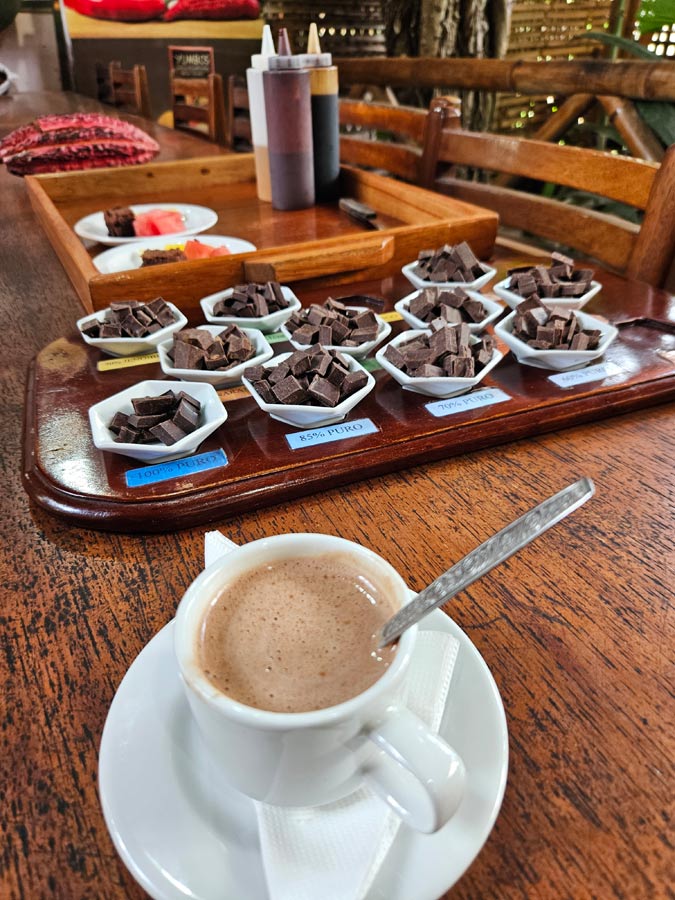
We ended up buying quite a few bars to take home, all of which were devoured within two weeks.
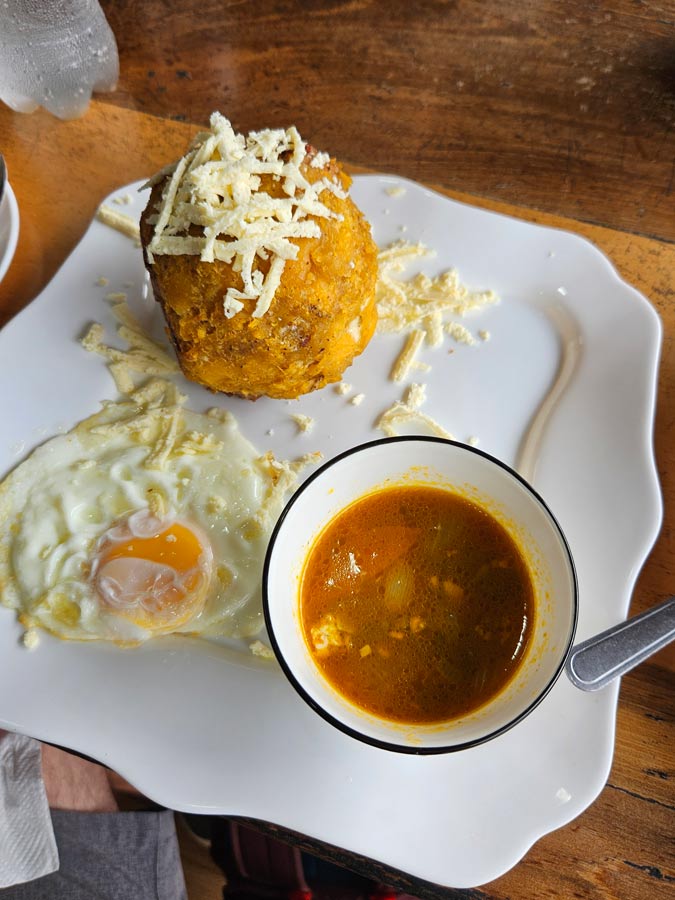
For lunch, I had a Bolón de Verde, a fried ball of green plantains mushed up with cheese and chicharrónes (there are other varieties as well.) Not as flavorful as you might expect, but dump some aji salsa on it and you’ve got a tasty, affordable meal. It’s about the size of a softball, so you won’t be hungry for the rest of the day.
Mindo does have fancier options. We went for a dinner El Quetzal, the restaurant attached to Mindo Chocolate Makers, a couple of blocks north of the central plaza (GPS misdirected us in this instance.) Fancy cocktails, followed by smoked trout tartar, chicken empanadas, and pork ribs.
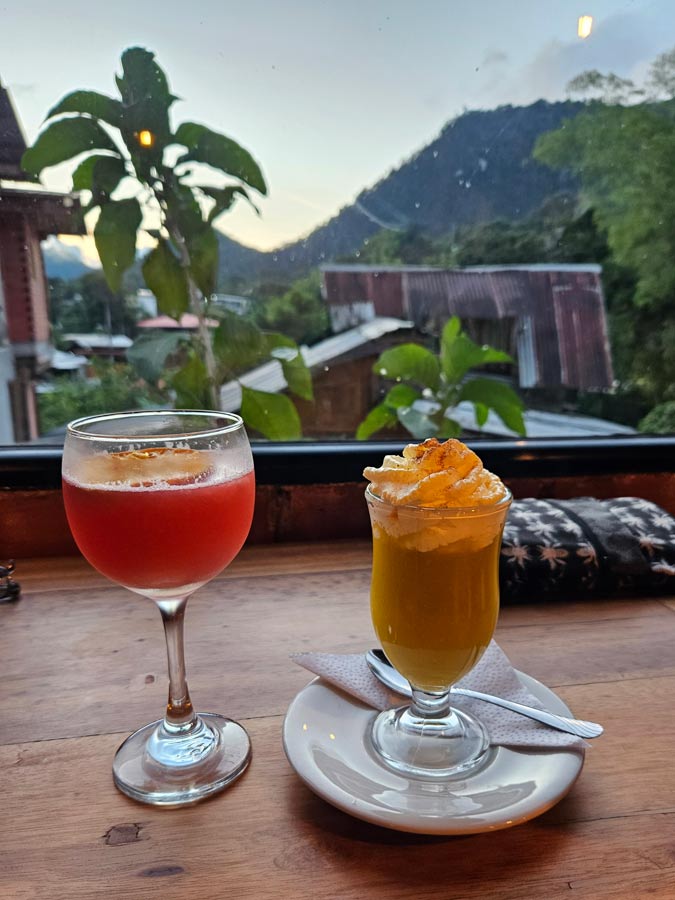
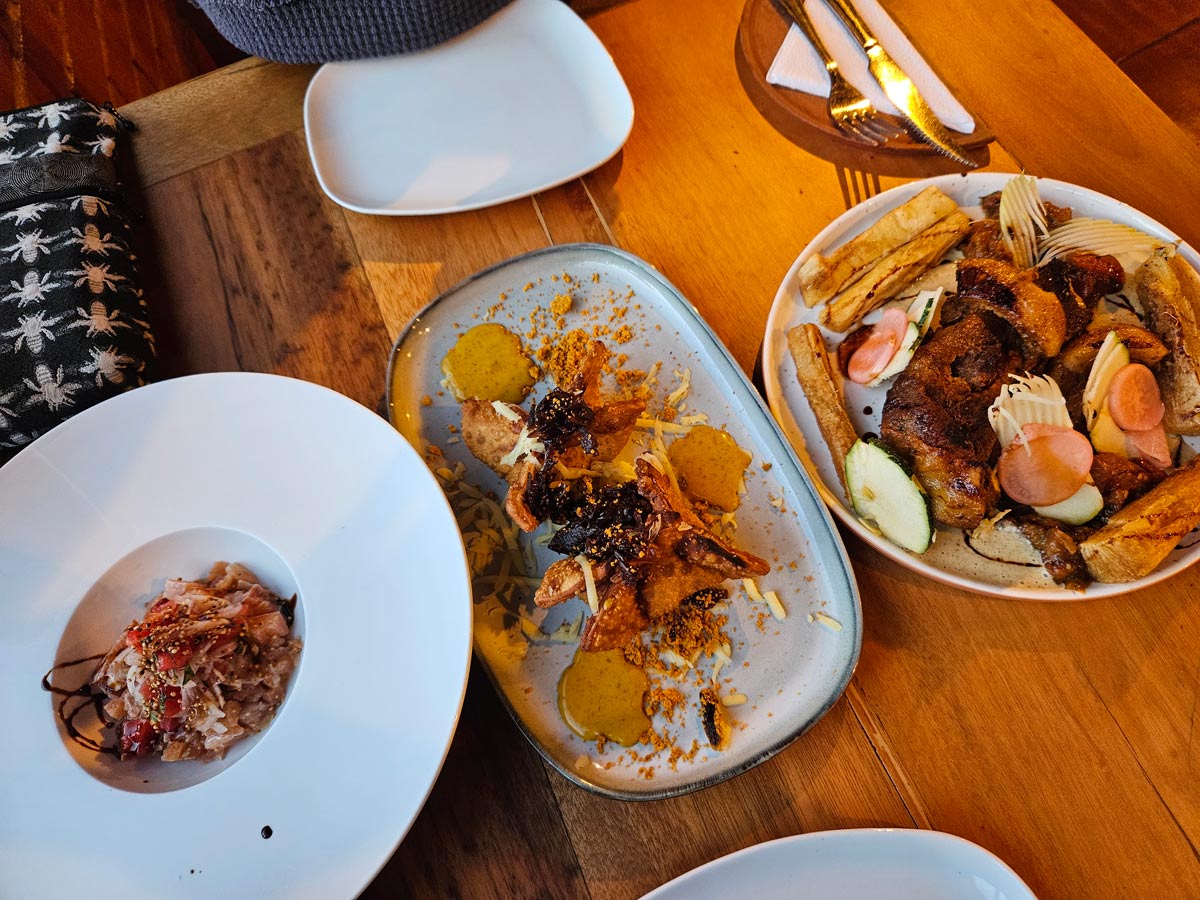
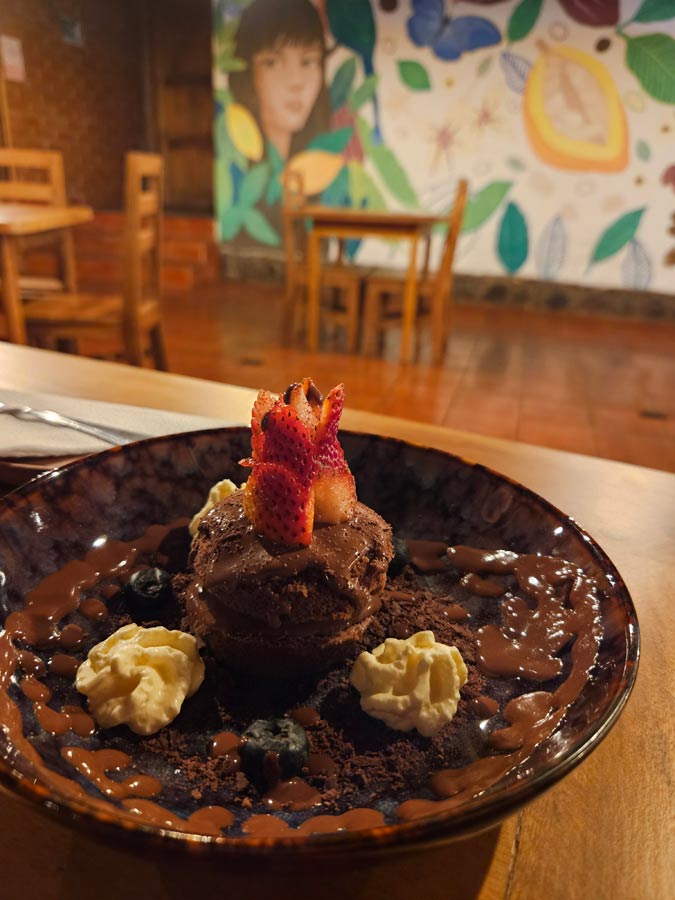
For desert, a chocolate tort. Sure, it’s basically another brownie. They’re everywhere, but they’re so good you won’t mind trying multiple varieties.
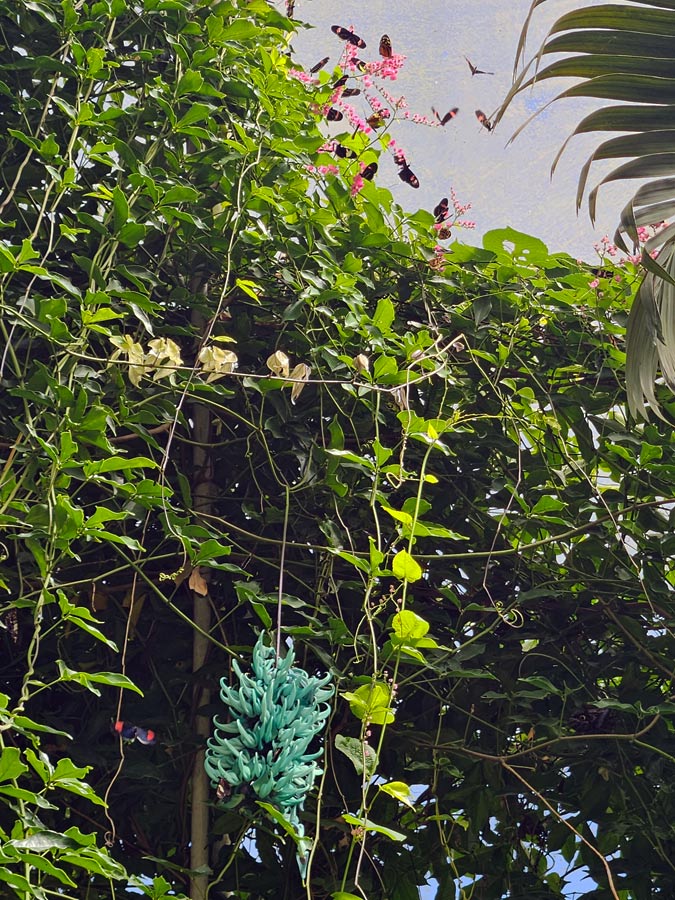
In the morning, we got a cab to Mariposas de Mindo, a butterfly breeding facility just outside of town. After a brief video introduction, you’re let loose in a large garden enclosed by netting. A wide variety of butterflies land on flowers, the path, or even your hand if you scoop up a bit of rotting banana and offer it to one of the bugs. Like Baños’ waterfalls, after this you won’t need to see another butterfly for a while.
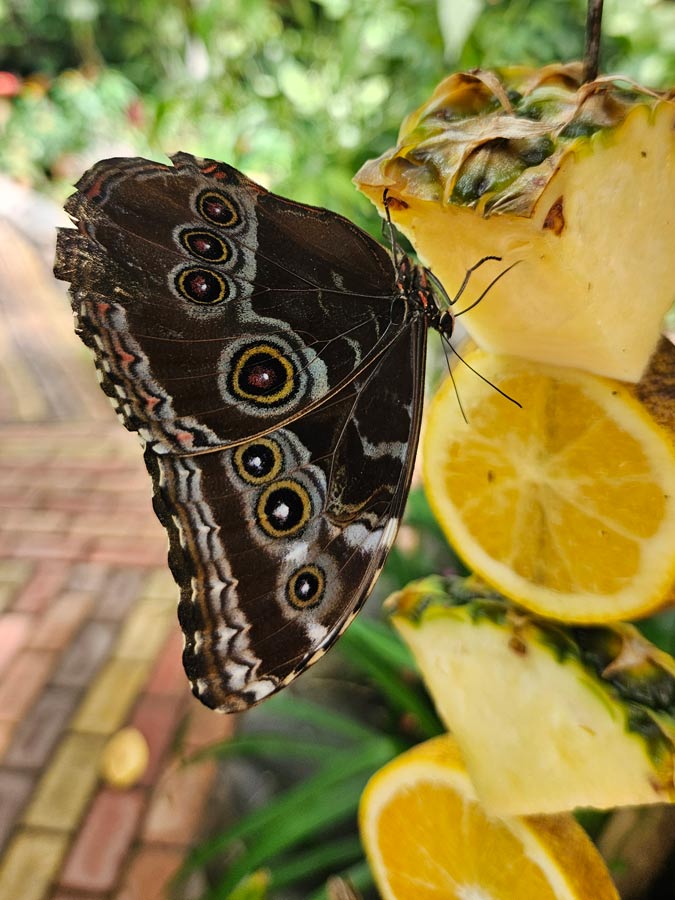
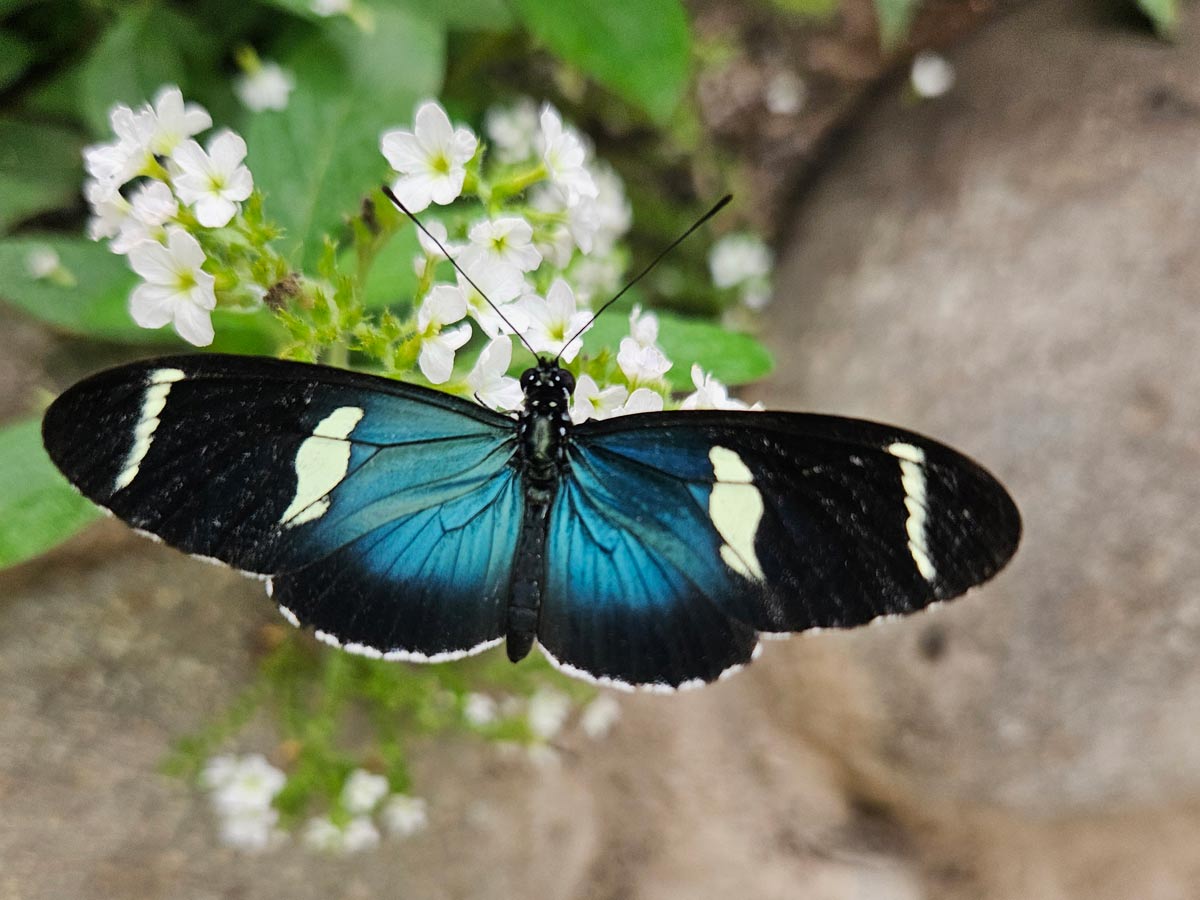
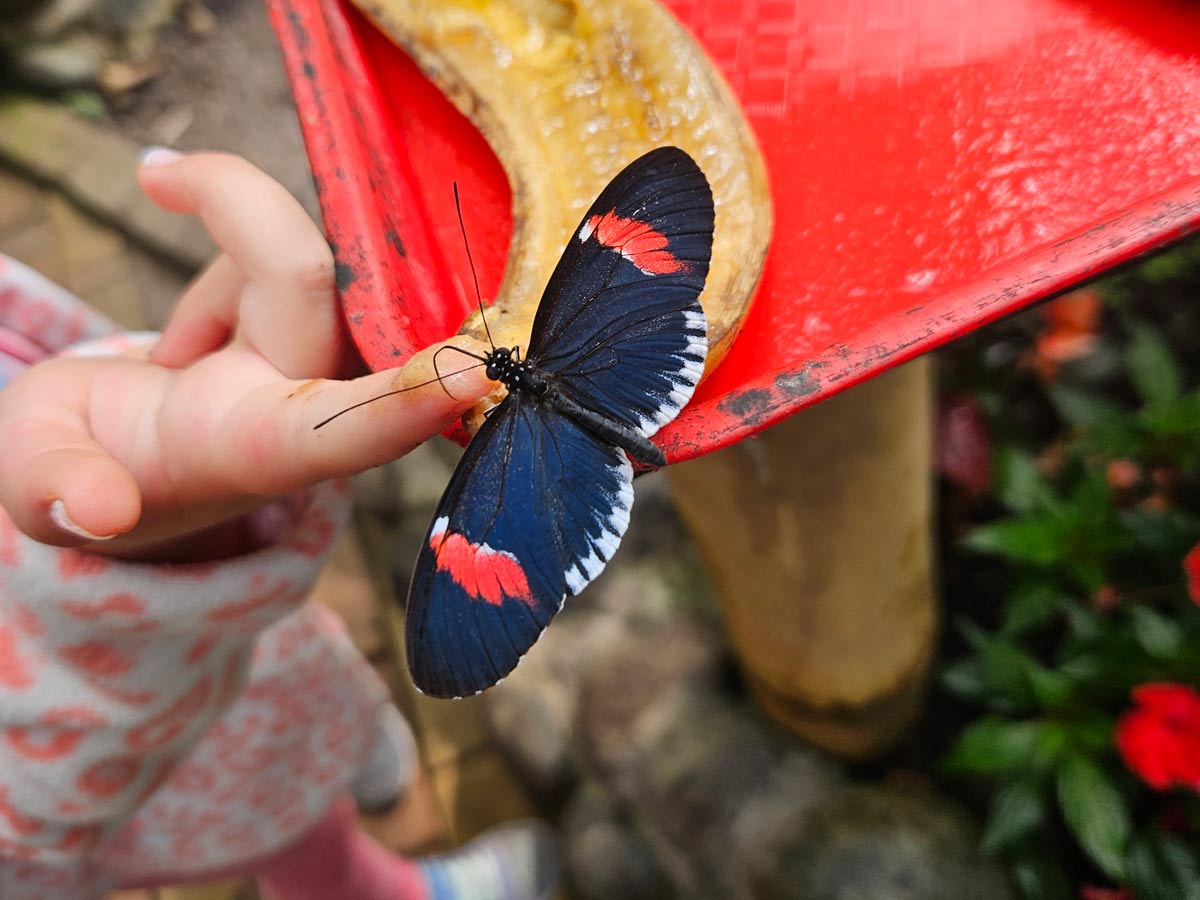
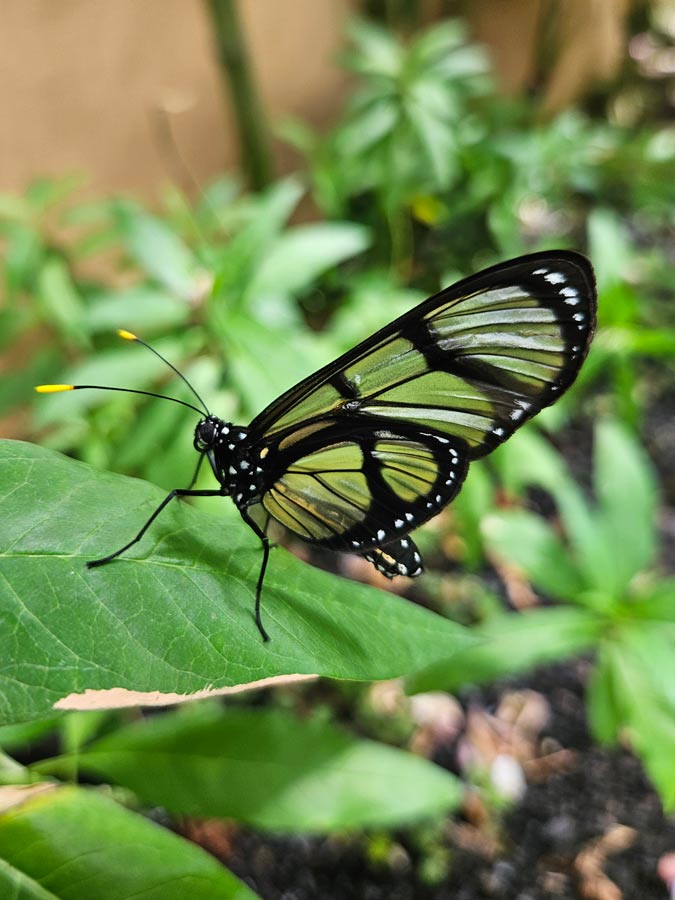
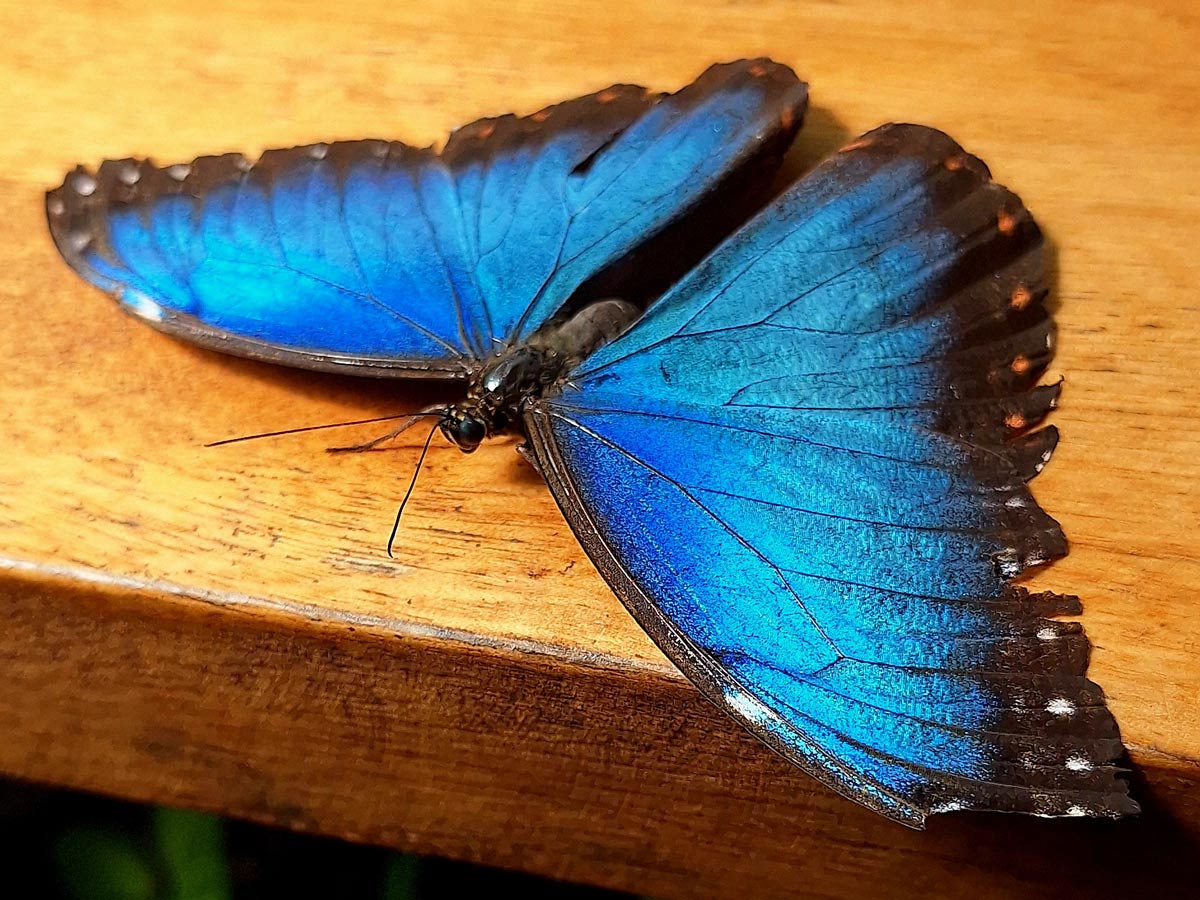
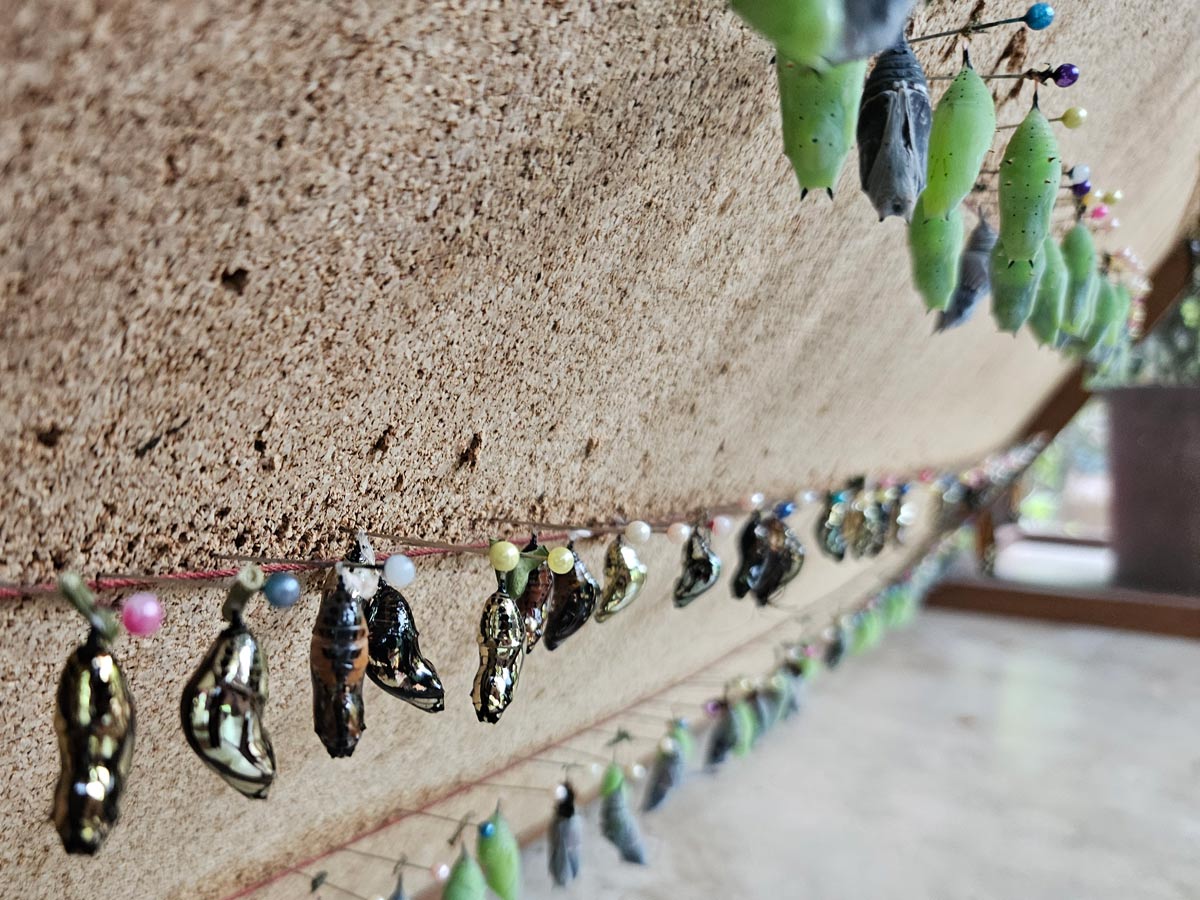
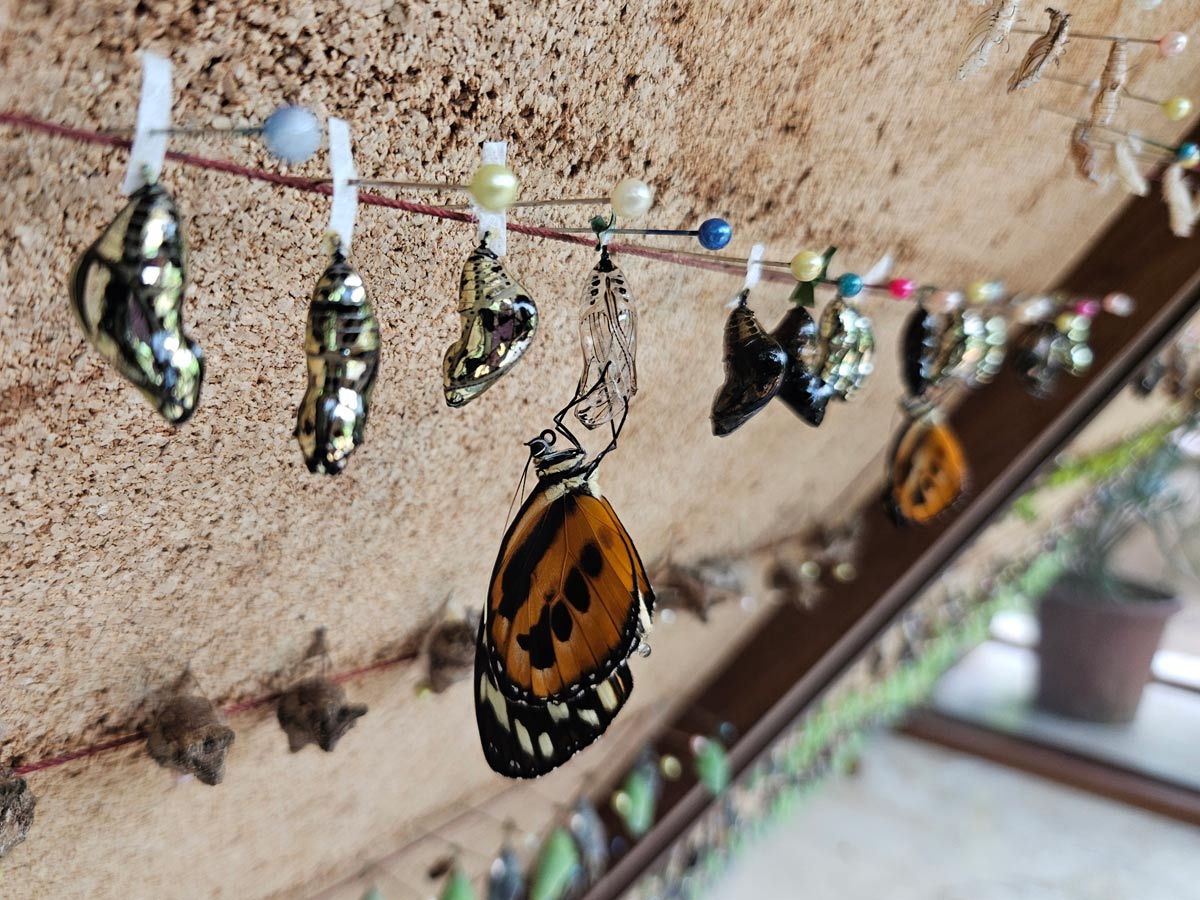
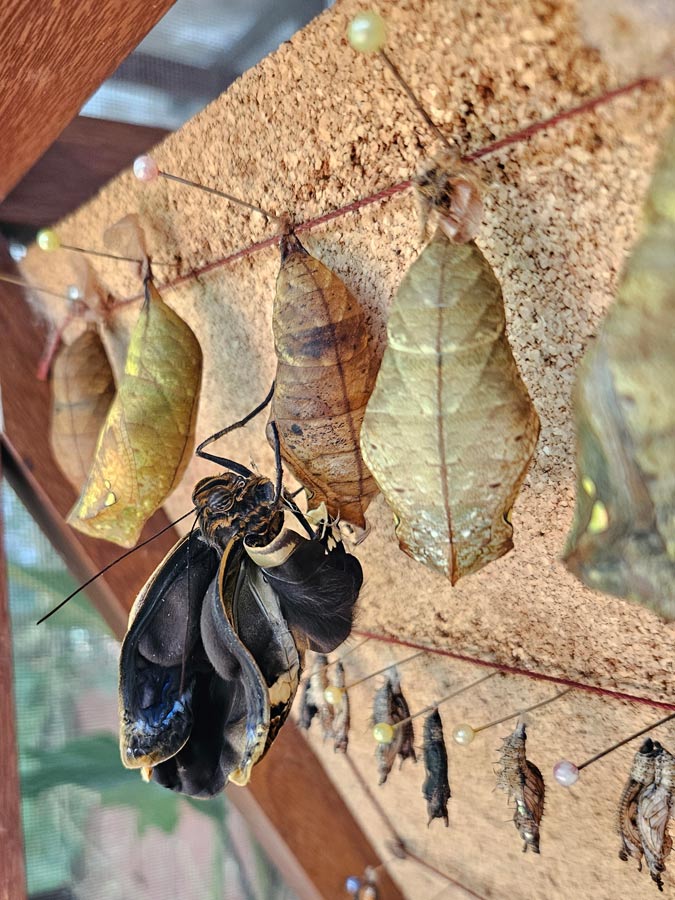
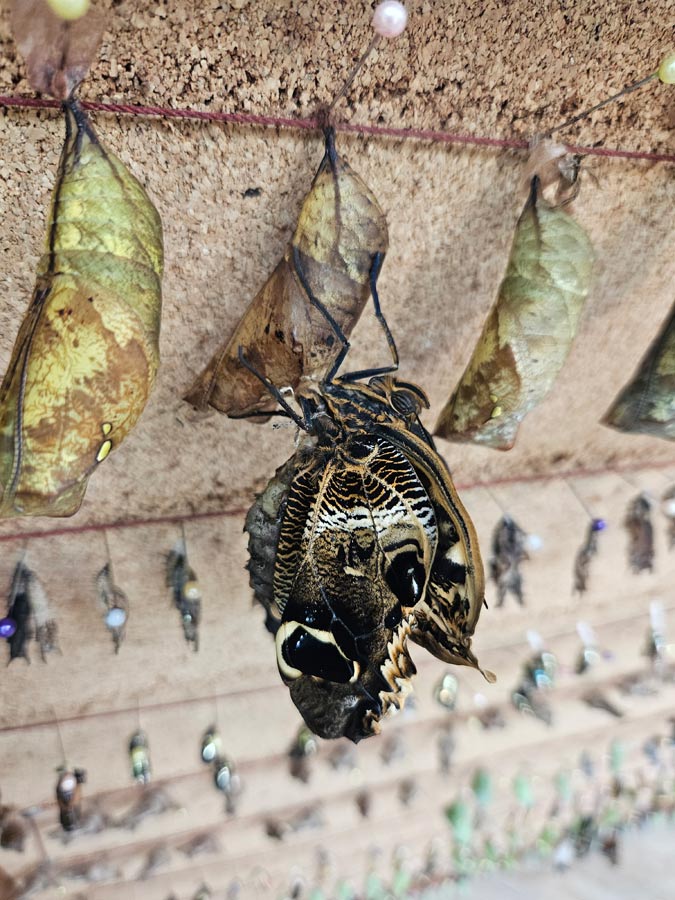
There is a big display of pupa, from which the butterflies emerge in the mornings. Several newly hatched butterflies were expanding and drying their wings as we watched. Even the pupa themselves were pretty, coming in a variety of colors, some even shimmering and transparent.
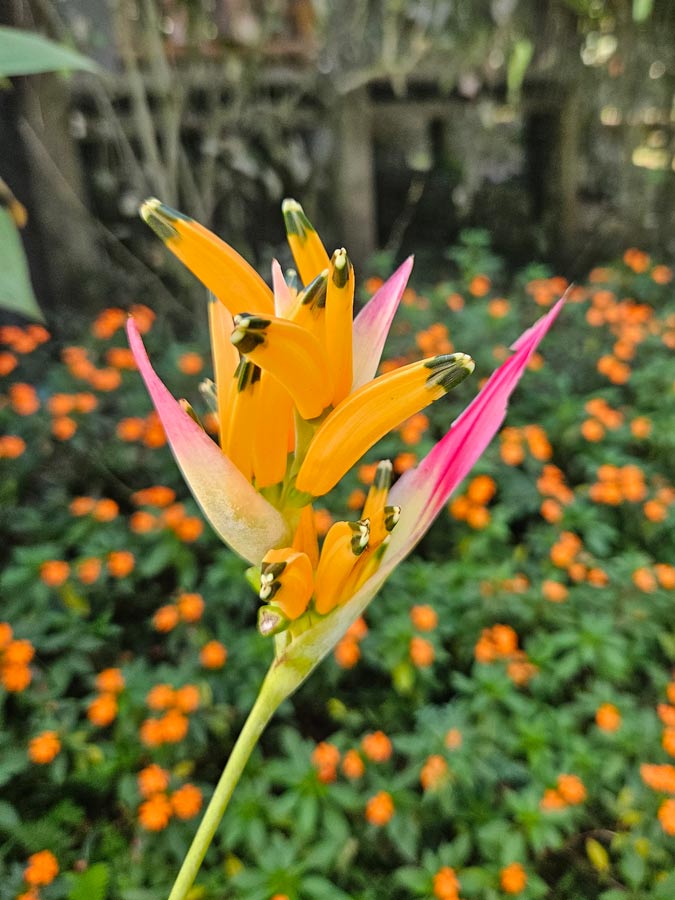
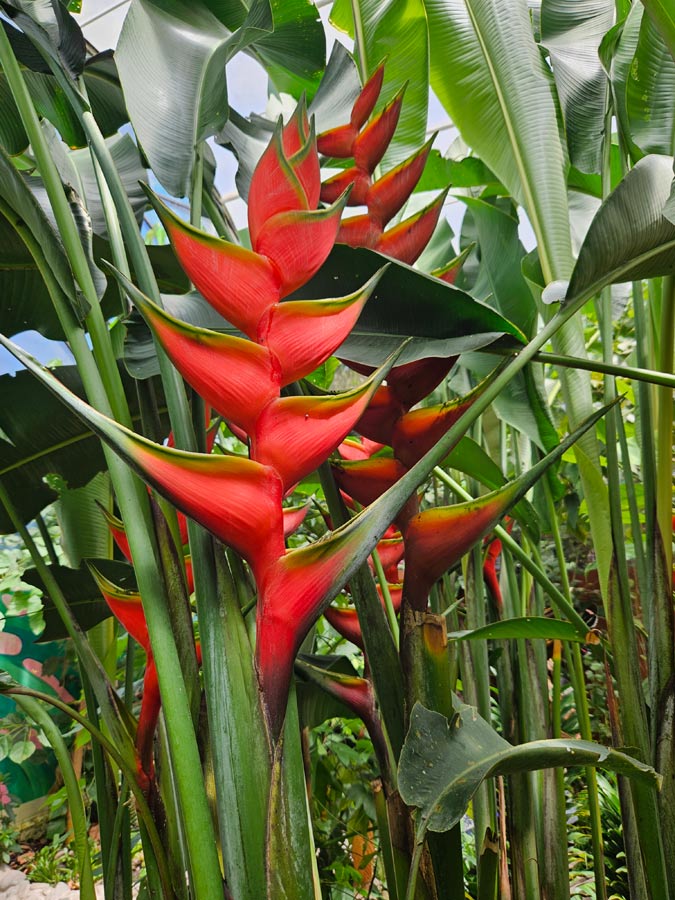
As if the amazing butterflies weren’t enough, they’ve got some gorgeous flowers too.
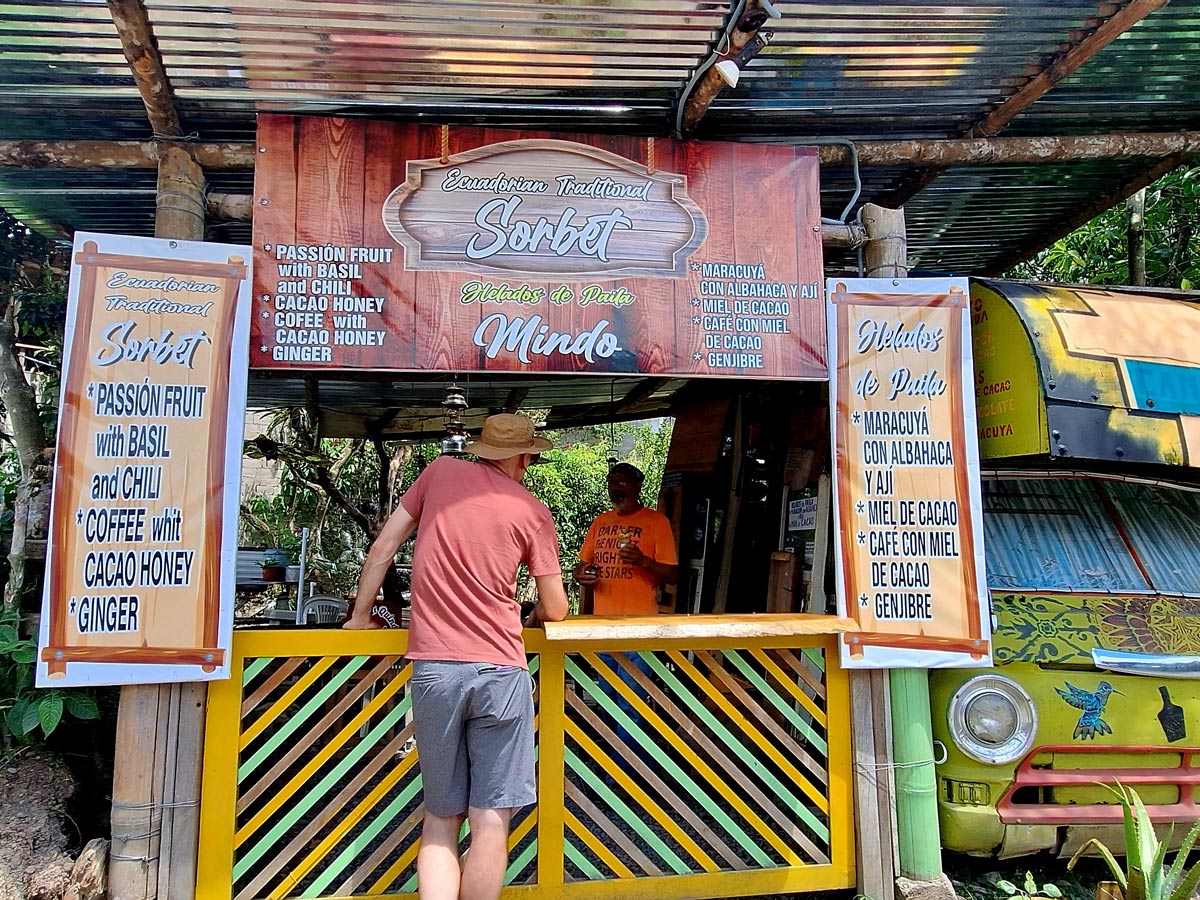
On the southern edge of town, a tattered 1959 Dodge van functions as a sorbet stand for Helados de Paila. The proprietor, a Tommy Chong impersonator, claimed he wasn’t open but then changed his mind and served us the best sorbet either of us had ever had.
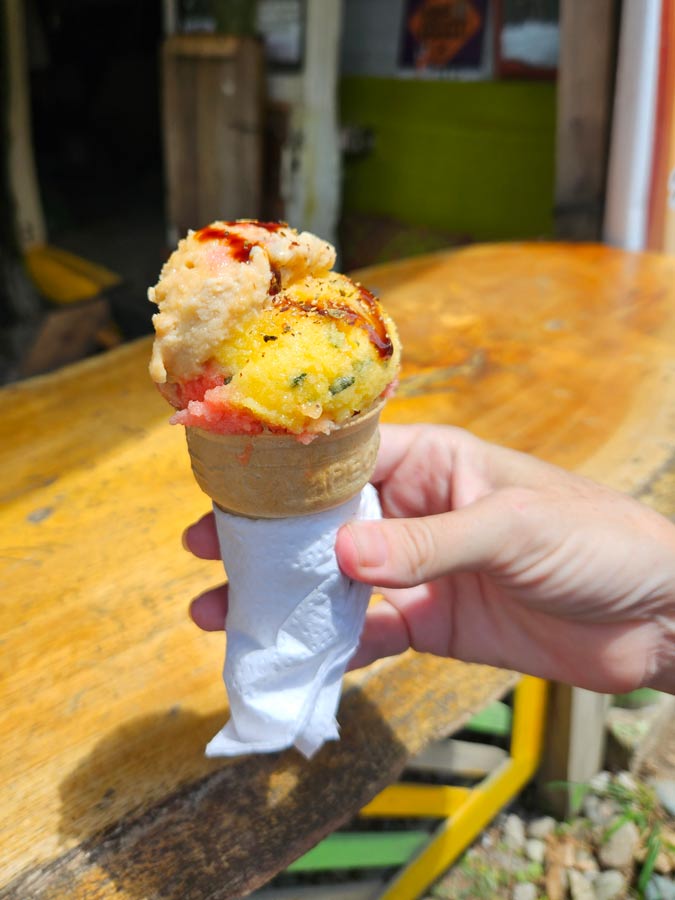
He insisted on combining a few of his already varied combination flavors, which worked together in surprising ways. Phenomenal. I stopped by the next day, hoping for more, but he had exhausted his supplies and would not restock until after our departure.
While I worked remotely, JJ visited Punto Ornitológico Mindo, a place with even more hummingbirds than our hotel. You can hold a flower or a cap full of nectar and they will eat from your hand.
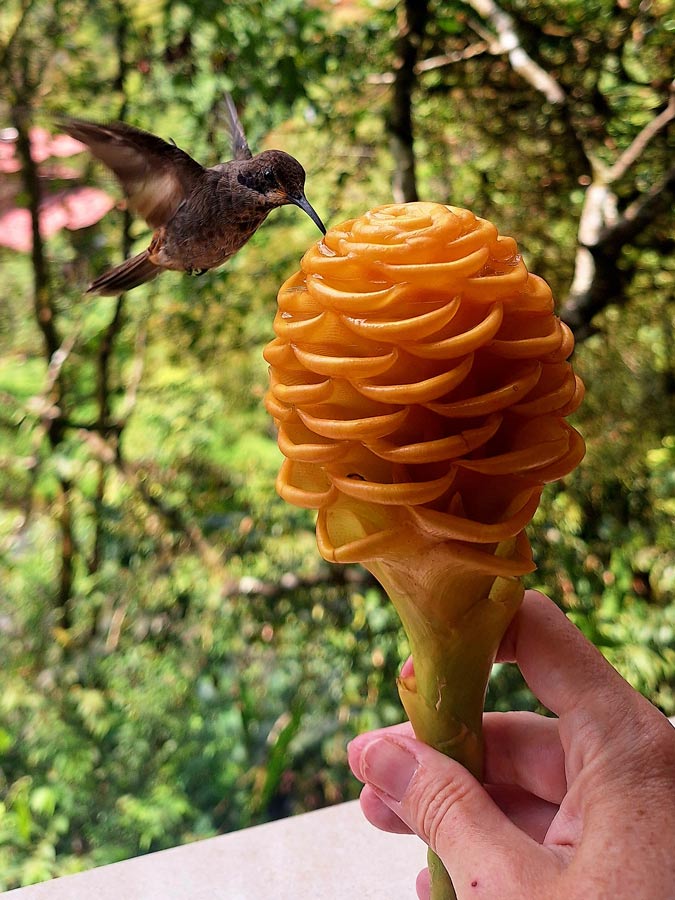
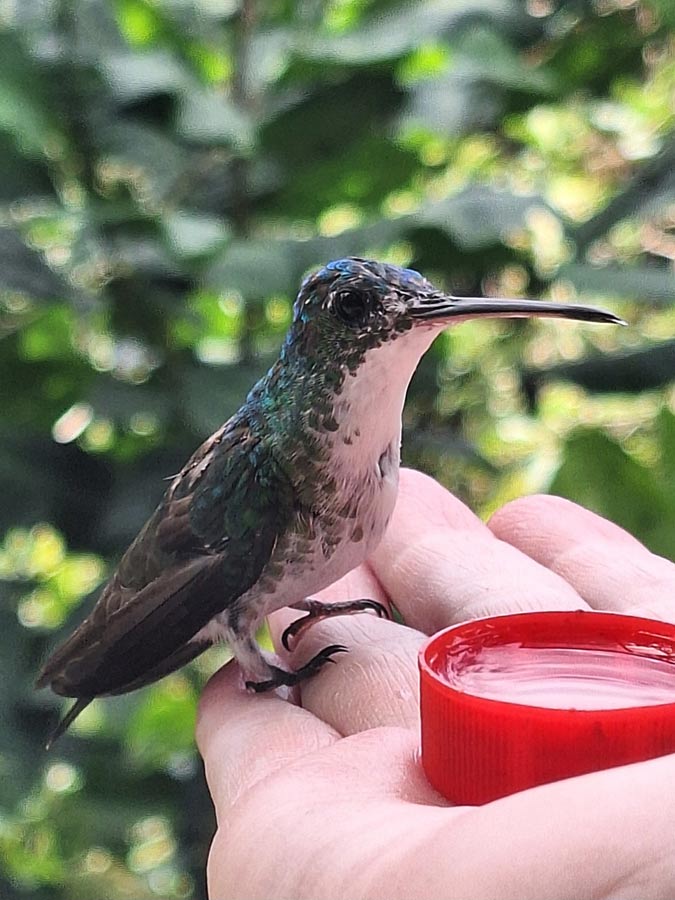
The birds are rather difficult to photograph. They flit about so quickly that none of my photos from the hotel are worth looking at. JJ took some lovely video of them hovering in front of her, however.
Mindo has won some birdwatching competition every year for several years running, something about seeing the most species in a single location in a single day. A couple of bird nerds at our hotel paid for a guide to take them out before dawn in hopes of catching the mating dance of the Cock-of-the-Rock. They returned disappointed, grumbling about the long hike but low number of critters to gawk at. “We saw more from the patio of the hotel.” Perhaps they should’ve just gone to Punto Ornitológico Mindo.
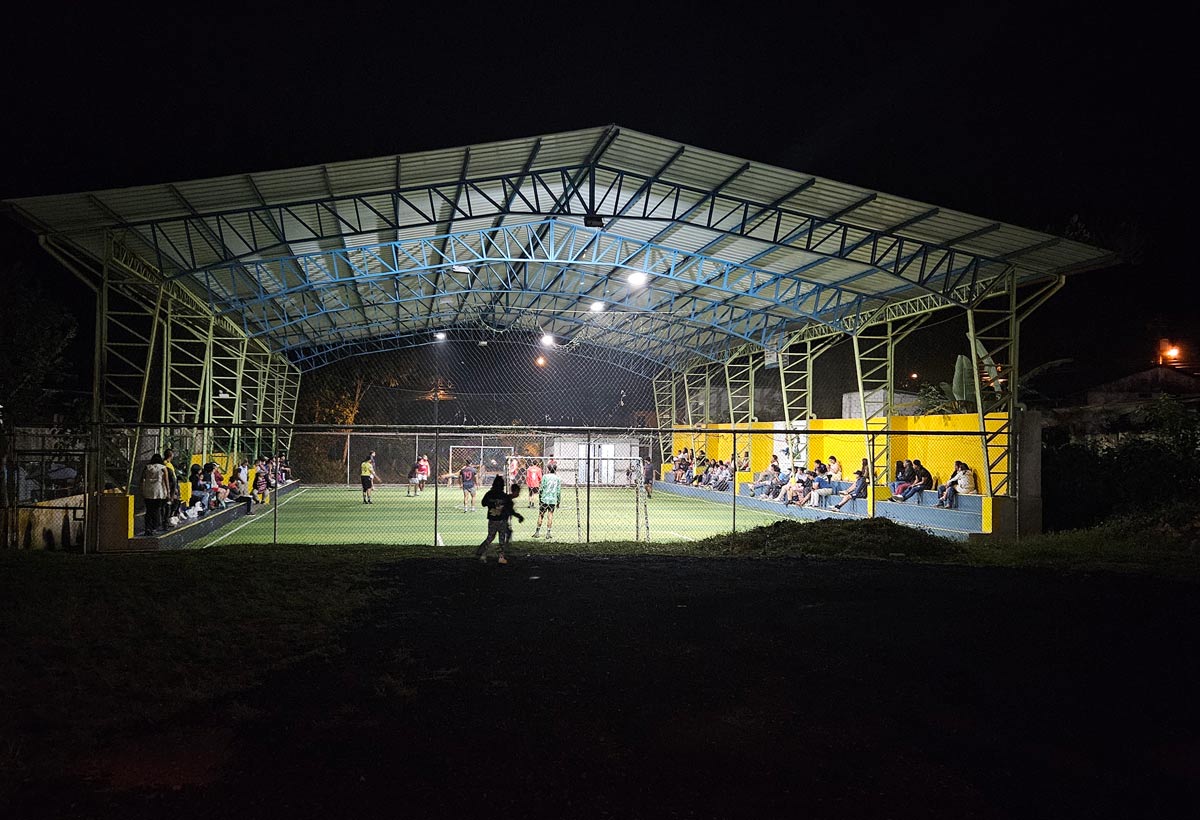
From what I’ve written, you might get the impression that Mindo is entirely focused on tourists. But given the large number of Ecuadorans it attracts, it doesn’t feel as gringo-fied as, say, Aguas Calientes, the town serving Machu Picchu. There are more Ecuadoran restaurants than other styles, and there are locals living regular lives. An indoor football/basketball court hosted games nightly.
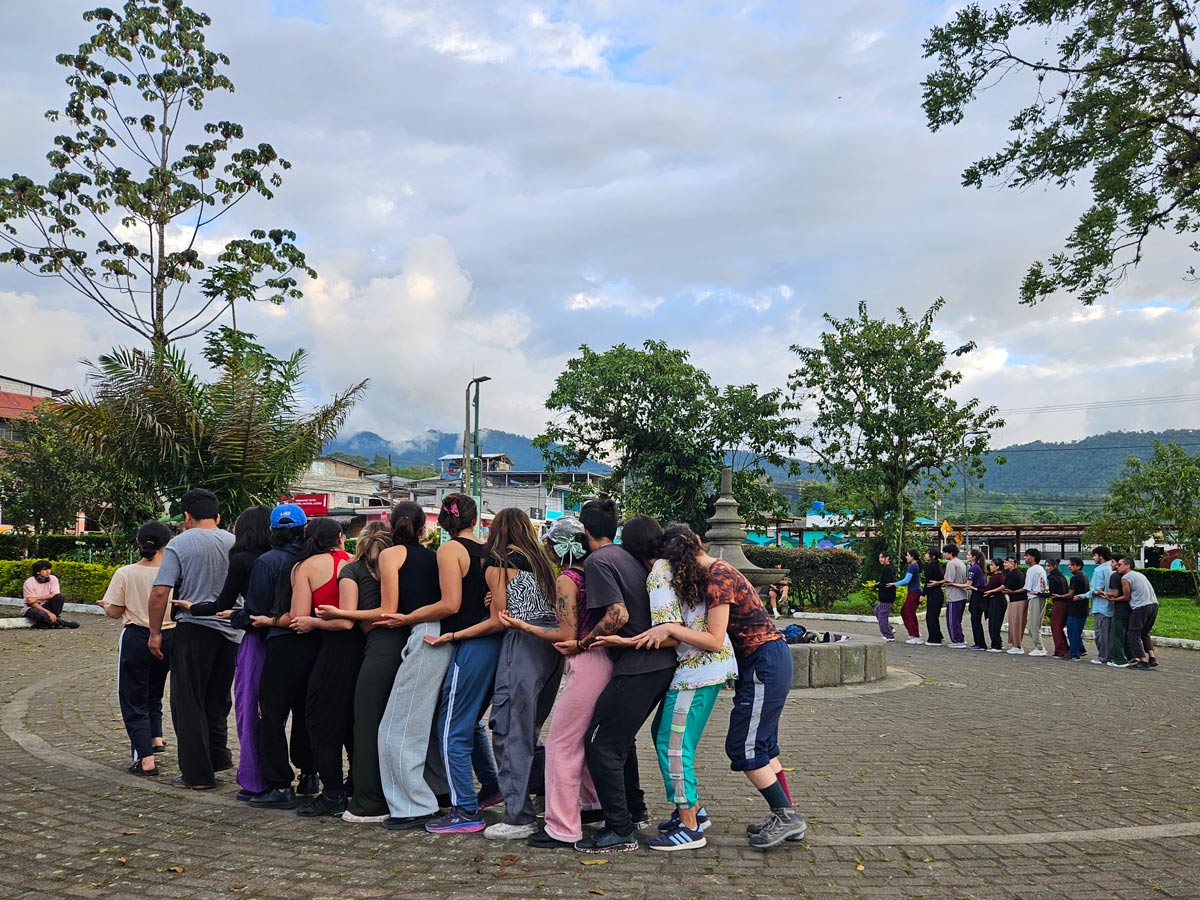
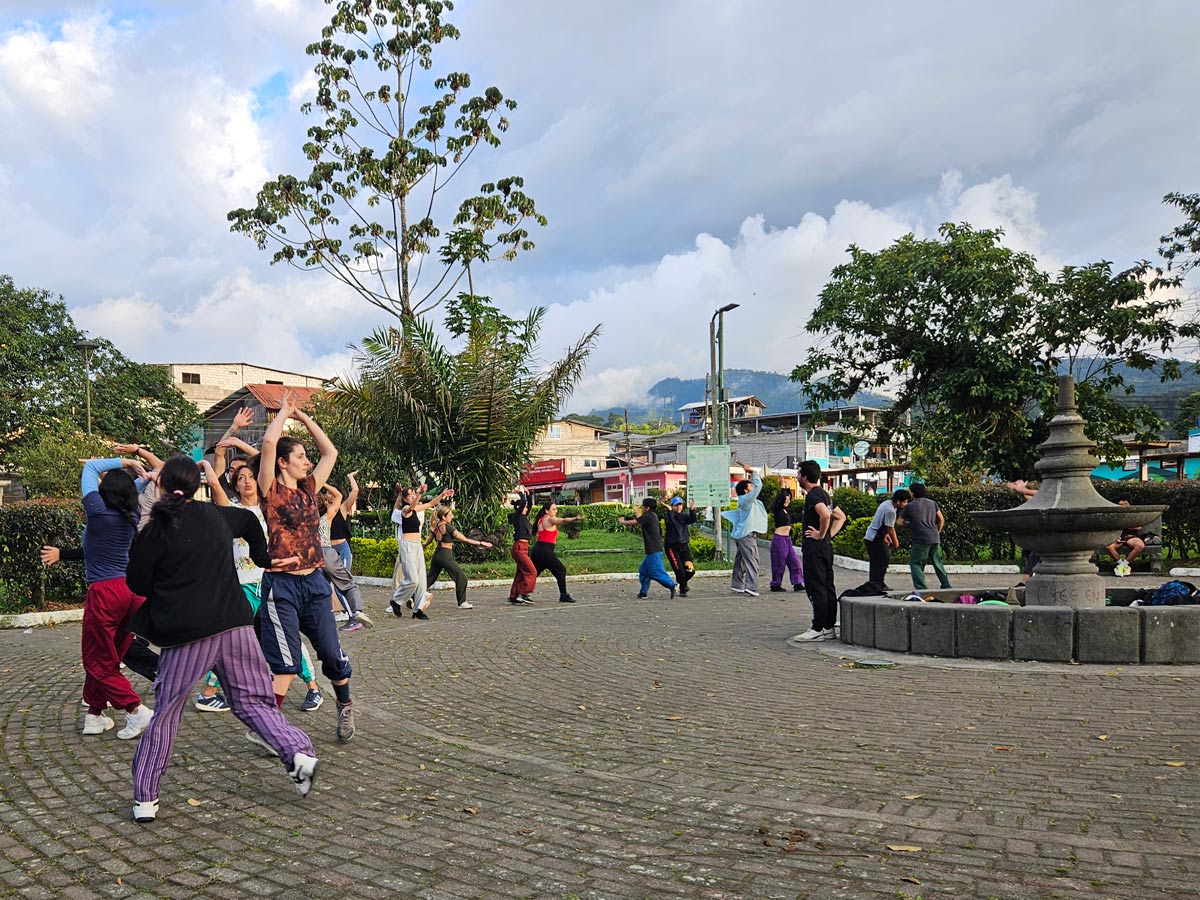
By day, a dance troupe rehearsed in the park, while a marching band practiced in the nearby school. Unbeknownst to us, we had scheduled our trip just before Ecuador’s Independence Day. I’m sure the weekend would’ve been a big fiesta in Quito, but I might’ve preferred the smaller charms of Mindo. Unfortunately, we hadn’t scheduled the trip to coincide with that party.
We’d hired a driver to get to Mindo, but opted for the much cheaper public bus to return to Quito. Signs at the station listed five trips daily, but the clerk said there were actually only two to choose from. We got tickets in advance, warned by our guidebook that it often sold out. We had a last meal in town before climbing aboard with a handful of locals. The bus stopped, seemingly at random, to pick up more folks until it was about half full. We wound along the equator again.
Quito was abuzz in preparation for Independence Day, with police on nearly every block. Even so, my phone was pickpocketed. JJ had come down with a cold in Mindo and I’d finally started feeling crummy, likely a combination of illness and the return to high altitude after a few days in the lowlands – a reminder to either stay on the meds or restart them a few days before climbing back toward the ionosphere. So, for once, I was actually ready to go home. A few days later, however, we were already discussing when we’d return.
Previously: